Worked bid comparison
The $8,500 gap that became $700.
To compare contractor bids for a remodel, first align the written scope, allowances, exclusions, and priced options; then keep unresolved work in a question list instead of inventing a cost. This illustrative kitchen example shows how that process can reverse the apparent price ranking.
Normalize the work before you compare the price.
Quoted total is the number on the proposal. Known comparable subtotal is the quoted total plus only written, priced differences needed to align the proposals. Unresolved exposure is work or contract language that still cannot be priced responsibly.
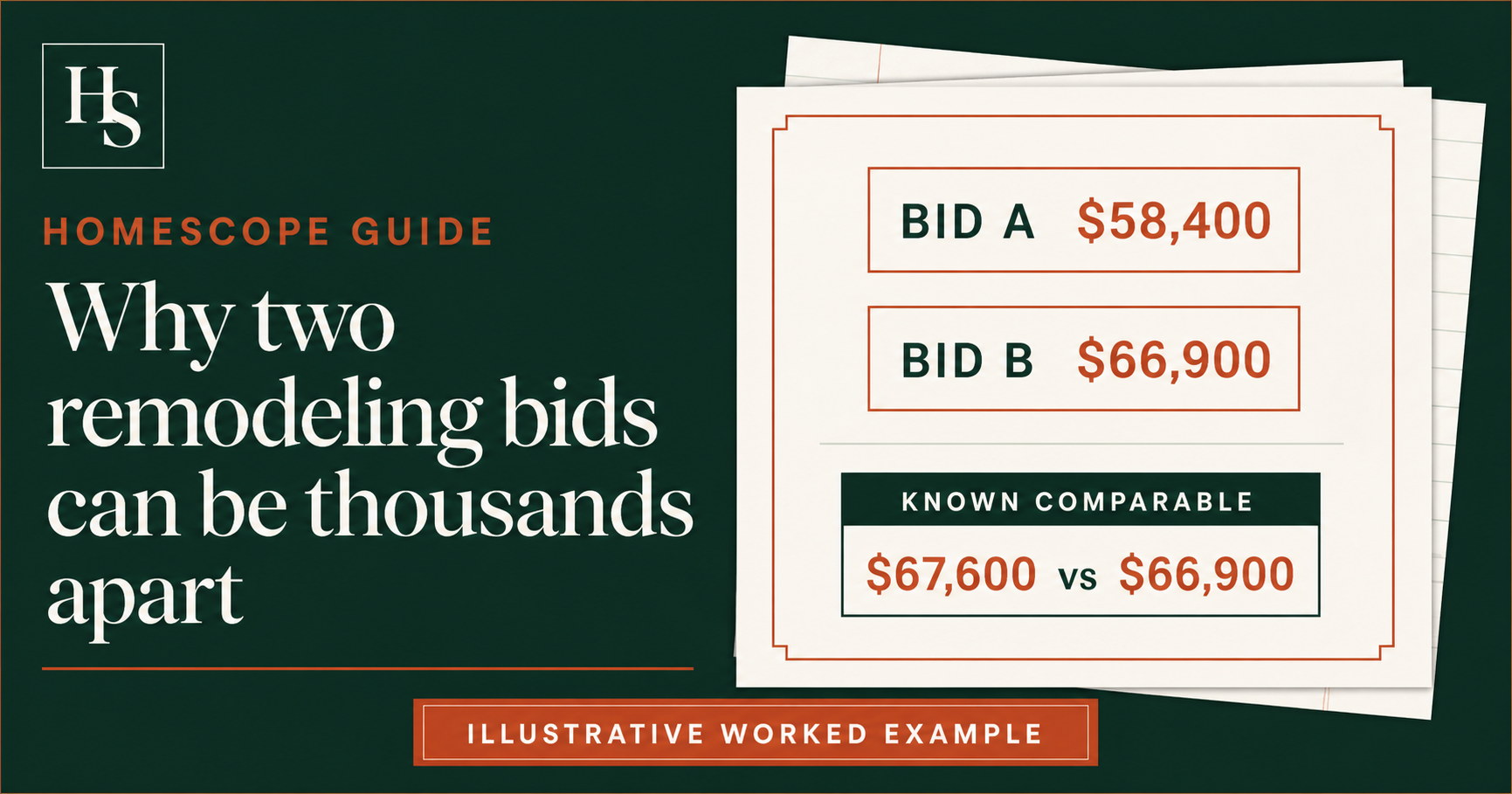
The ranking changes after only the written, priced differences are aligned. The detailed example below shows every adjustment and keeps unresolved work out of the arithmetic.
Four-step normalization
Make the proposals describe the same job.
Need to inspect one proposal first? Read the contractor estimate line by line before comparing it with another.
- Lock the shared scope.List the rooms, quantities, products, preparation, trades, protection, cleanup, and closeout records both bids should address.
- Extract written differences.Record inclusions, exclusions, allowances, and options exactly as written without filling gaps with assumptions.
- Normalize known dollars.Add only written, priced differences needed to align the bids and show each adjustment separately.
- Quarantine unknowns.Turn vague or missing work into identical written questions, then compare revised proposals as a whole.
One kitchen, two written proposals
At first glance, Bid A looks 13% lower.
This is a constructed educational example. The figures are not Michigan price benchmarks, observed contractor bids, or a recommended budget.
| Comparison line | Bid A | Bid B | Normalization effect |
|---|---|---|---|
| Quoted total | $58,400 | $66,900 | Bid A appears $8,500 lower |
| Cabinet allowance | $10,500 | $15,000 | +$4,500 to align Bid A |
| Demolition + disposal | Excluded; $3,800 option | Included | +$3,800 to Bid A |
| Permit administration | Excluded; $900 option | Included | +$900 to Bid A |
| Known comparable subtotal | $67,600 | $66,900 | Bid A is now $700 higher |
The apparent $8,500 advantage disappears. But Bid B is not automatically the winner: unresolved differences still need written answers.
Do not force uncertainty into a dollar
Some differences belong in a question column.
A normalization worksheet should not invent prices for vague or missing work. Record the uncertainty, send the same clarification request to both bidders, and compare revised proposals instead of scattered texts or verbal answers.
Bid A says “as needed”; no price or approval rule.
Bid B includes one stated allowance with an overage rule.
Not named as included or excluded.
Named rooms, coats, and paint line specified.
Start window only; no substantial-completion assumption.
Start window and 8–10 week planning duration stated.
“Additional work billed separately.”
Written scope, price, schedule effect, and approval required before changed work.
Portable field worksheet
Bring one comparison sheet to every follow-up.
The five-page PDF gives you a shared-scope brief, two proposal extraction sheets, a line-by-line normalization table, an unresolved-questions log, and a dated decision record. Print it, save it, or use it beside HomeScope’s interactive tools.
Resolve the comparison
Ask for revised proposals before ranking totals again.
Then compare the same scope, allowances, exclusions, payment terms, and unresolved questions in one place.